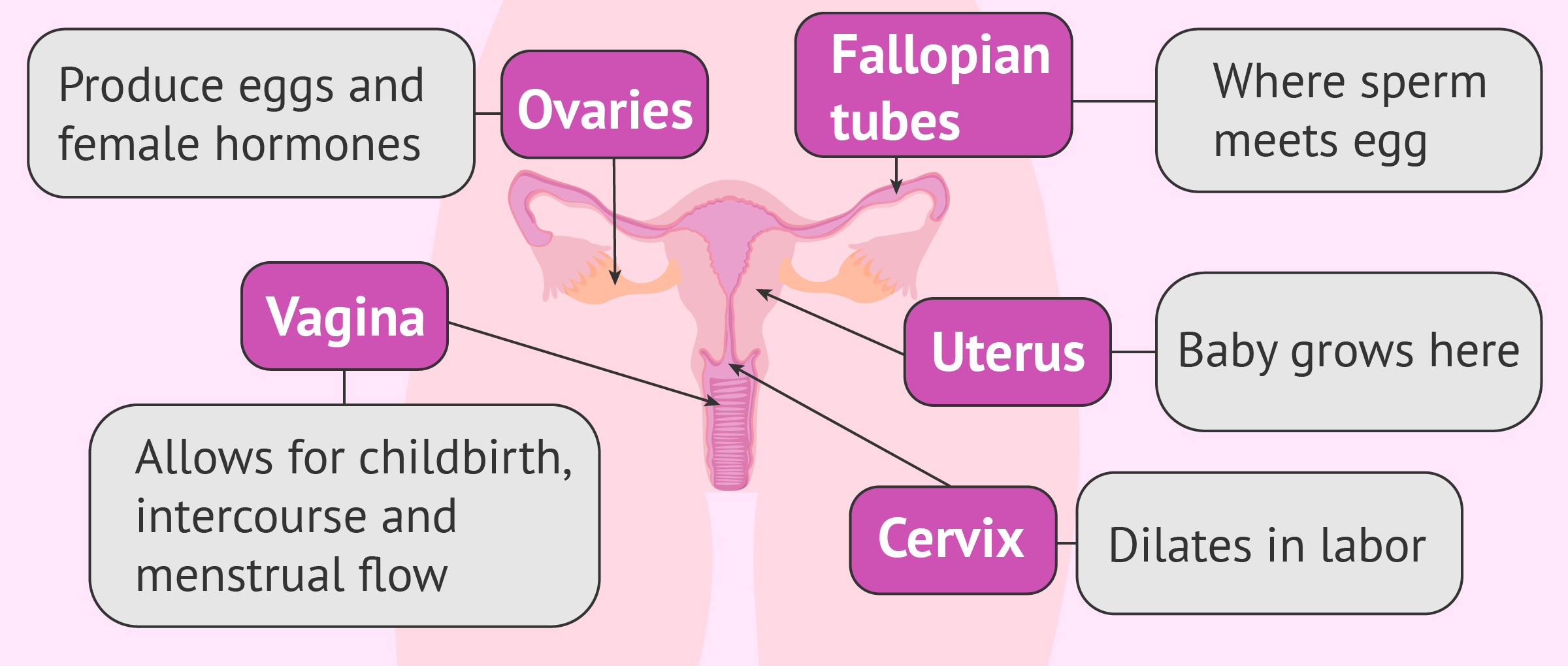
The uterus is a vital organ, primarily found in female mammals, and plays a critical role in reproduction. It's a muscular organ located in the pelvis, accountable for nurturing a forming baby during pregnancy. Beyond pregnancy, the womb also sheds its mucosa during the menstrual cycle, which is a natural occurrence in a woman's life. The shape is usually rounded, and this structure can stretch considerably to hold a developed fetus.
Understanding These Organs
The female gonads are essential components of the female reproductive framework, primarily liable for producing eggs click here and substances. Typically, women have two ovaries, located on either side of the uterus. They fulfill a significant function throughout a female's life, beginning with development during fetal periods and continuing through periods and potentially into the menopause. Their sophisticated functions are intimately intertwined with the broader health and condition of a female.
Understanding Fallopian {Tubes
Oviduct tubes are vital parts of the female procreative mechanism, playing a crucial part in fertilization. They stretch from the uterus to the testicles, acting as a channel for the ovum to travel from the ovary to the uterus. Regularly, the joining of sperm and egg occurs within the ampulla, a particular part of the salpingian channel. Furthermore, inflammation or blockage of these tubes can greatly affect the ability to conceive.
Keywords: vagina, vulva, anatomy, health, female, reproductive, intimate, hygiene, disorders, sexually transmitted infections, lubrication, childbirth, menstruation, pelvic floor, estrogen, pH balance, yeast infection, bacterial vaginosis, pelvic pain.
The Female Genital Region
The birth canal is a essential part of the person's reproductive structure, often interchanged with the external genitalia. It plays a vital role in childbirth, the menstrual cycle, and sexual health. Proper care is essential for preventing conditions like candidiasis, vaginal infection, and addressing lower abdominal discomfort. Factors such as estrogen, internal environment and adequate moistness significantly impact the woman's condition. Awareness of sexually transmitted infections and their potential impact on the female region is also absolutely necessary for overall reproductive fitness. The strength of the pelvic muscles is also important for recovery.
The Female Genitalia
The female external anatomy encompasses the visible features of the female reproductive system outside of the body. It's a complex area with multiple functions, including shielding the internal structures and serving a role in intimate function. Familiarizing oneself with its anatomy is vital for complete wellness and reproductive understanding. This encompasses the folds, erectile tissue, and the area which houses the urethral opening and vaginal passage.
The Cervical Canal
The cervical canal, a vital part of the woman's anatomy, acts as a connection between the uterus and the birth canal. Generally, it is a narrow channel, about two to three centimeters extended, and plays a key function in menstrual cycles and childbirth. Throughout pregnancy, the cervix stays sealed to protect the developing fetus, and then widens significantly to allow labor. Its health is critical for procreative overall health.
Examining the Labia Majora
The outer lips are a pair of prominent skin structures that constitute a component of the female genital anatomy. Frequently, they resemble the pubic mound, being composed of greasy material and shrouded by pubic growth, although this can vary widely among women. Serving as the important protective barrier, this help to guard the additional delicate regions underneath the genital area, also it add to the overall form and role of a female body.
Delving into These Minora
These minora are an pair of small folds within flesh located just inside the vaginal opening. These folds vary significantly regarding size, shape, and color across people, often appear a different color than the surrounding skin. While they have no a direct purpose for reproduction, they important for shielding and delicate internal area. Changes in the dimensions or feel might sometimes indicate an clinical condition, so it's important to find medical guidance if any worries occur.
Exploring The Clitoris
Several people recognize the clitoris, a small organ located at the apex of the external reproductive organs, to be a crucial area of sexual satisfaction. Distinct from other genital organs, it has no a direct purpose in procreation; its sole purpose is linked to sexual excitement. The structure is remarkably sensitive, comprising many of nerve endings, allowing it to deliver intense feelings. More study continues to broaden our knowledge of the sophisticated anatomy and function.
- This is often known as the third erotic zone.
- Many consider awareness of the clitoris can be liberating.
Learning About Bartholin's Glands
Found on either side of the vaginal opening, Bartholin's glands|glands|structures are a usually minor part in female reproductive health. Usually, they secrete a modest amount of fluid|lubrication|moisture that supports with vaginal moistening during sexual activity. Sometimes, these glands|ducts|tubes can be blocked|clogged|swollen, leading to a tender cyst|swelling|mass and difficulty with comfort. A condition, known as a Bartholin's cyst, frequently requires doctor's attention.
Okay, here's the article paragraph adhering to your strict spintax and HTML requirements, focusing on Skene's Glands.
Exploring Paraurethral {Glands
Skene's glands, also known as paraurethral tubes, are accessory structures located near the urethra within the female pelvis. These structures are believed to function similarly to the male prostate tissue, producing a fluid that participates in lubrication and protection of the urethra. While these accessory purpose isn't fully clear, research hints they could play a role in female sexual well-being. A few women experience discomforting issues related to these tubes, prompting further study. Ultimately, Skene’s structures represent an critical but often overlooked component of female anatomy.
Keywords: hymen, virginity, anatomy, female, membrane, health, misconception, folklore, cultural, biology, medical, intact, rupture, bleeding, hymenal, tissue, perception, history, examination, psychology.
The Hymeneal Membrane Overview
The hymeneal tissue is a delicate layer of skin located at the entrance of the uterus in females. Often associated with chastity in societal beliefs, it's importantly a part of girl’s anatomy. It’s necessary to understand that the hymen isn’t always intact, and its presence or absence doesn’t definitively reveal purity. Numerous activities, including exercise, tampon use, or even vigorous exertion, can cause a tear of the hymen. The commonly-debated bleeding sometimes linked with hymeneal tissue rupture is typical but isn’t always seen. Medical professionals may undertake an assessment of the hymeneal membrane, but its appearance shouldn’t be used as a sole measure of reproductive history. There are many false ideas surrounding the hymeneal membrane but it's critical to differentiate medical information from folklore and emotional beliefs.
Okay, here's an article paragraph on "Perineum" adhering to your incredibly specific instructions.
Delving into the Perineum
The perineal region is an fascia-covered region situated between the anus and the scrotum in individuals. This structure serves the critical part in several physical functions, such as supporting the abdominal structures and providing sensory signals. Furthermore, it undergoes significant elongation during labor in females, which might lead to minor pain. Familiarity with the structure is consequently essential for clinical practitioners.
Learning About Your Pelvic Floor
The lower abdomen is a group of muscles that support your organs and have a vital role in general health. It's sometimes overlooked, but strengthening your core can improve everything from bowel function to posture. Problems like weakness or discomfort can frequently can be alleviated with specific exercises. It's important investigating these muscles and how to maintain them strong throughout your life.
The Birth Canal
The female canal, also known as the birth canal, is a muscular passage extending from the perineum to the cervix. It serves as the chief route for periodical flow, sexual intercourse, and parturition. This distensible structure is lined with tissue and possesses specialized folds, called vertical ridges, which allow it to expand considerably. Its length varies among individuals, but typically measures around several inches in relaxed state. Maintenance of the vaginal canal is crucial for overall health and comfort.
The Uterine Layer (Endometrium)
The endometrium is a remarkably dynamic tissue that plays a crucial function in female reproductive capacity. This mucosal membrane of the uterus is discarded during menstruation if conception doesn’t happen , and it thickens each month in anticipation for a potential lodging of a fertilized egg . It’s composed of glandular and supportive cells, creating a specialized environment that continuously modifies throughout the reproductive cycle. Moreover , the internal depth and composition are significantly shaped by hormones , primarily oestrogen and progesterone .
Exploring Ovarian Follicles
Egg follicles are essential structures within the ovary, playing a central role in the maturation of eggs and the regulation of the menstrual cycle. Each female organ initially contains a large number of primordial follicles, which are tiny sacs containing immature ova. Throughout a woman's reproductive life, these follicles mature through different stages, some undergoing dominant follicle selection, others staying in a dormant state. The process of follicle growth involves intricate interactions between chemical messengers, including follicle-stimulating hormone and luteinizing hormone, which control the events leading to ovulation.
Understanding Oestrogen Binders
Estrogen receivers are internal proteins found within several cell kinds throughout the organism. These important entities act as mediators, binding to estrogen agents and subsequently initiating a cascade of biological events. Essentially, when an estrogen chemical binds to a binder, it encourages a structural alteration that leads to different gene transcription, influencing numerous activities, like maturation, reproduction, and overall well-being. The presence and concentration of these receptors can change significantly amongst areas, justifying the diverse effects of oestrogen in the living structure.
Estrous Targets
Progesterone targets, often abbreviated as PRs, are cytoplasmic receptacles that mediate the effects of progesterone, a essential steroid chemical. These molecules are part of the nuclear receptor superfamily and, upon association with progesterone, undergo a conformational change leading to translocation to the core and subsequent regulation of gene expression. Two major isoforms, PR-A and PR-B, exist due to alternative splicing of the genetic material, each exhibiting subtly unique regulatory properties and tissue presence. Their function is critical in the maintenance of pregnancy, the growth of the mammary glands, and the control of the ovulatory cycle in females. Dysregulation of estrous receptor transmission has been linked in a number of fertility disorders.
Keywords: reproductive system, male reproductive system, female reproductive system, fertilization, hormones, ovaries, testes, uterus, sperm, egg, menstruation, puberty, pregnancy, contraception
The Reproductive System
The individual reproductive system is a fascinating network of components responsible for continuation of the species. It generally splits into the male reproductive system and the female reproductive system, each with specialized functions. In males, the testes produce sperm, while in females, the ovaries release eggs. Fertilization, the fusion of a sperm and an egg, can lead to pregnancy, a incredible period of development . Hormones, like estrogen and testosterone, play a vital role in controlling development during puberty and throughout reproductive life. Menstruation is a cyclical process in females, and contraception methods are obtainable to avoid unintended pregnancies. This extraordinary system is fundamental to the perpetuation of our lineage.